AKA: Wild Carrot, Queen Anne's-Lace, Birds-Nest, Devil's Plague, Lace Flower
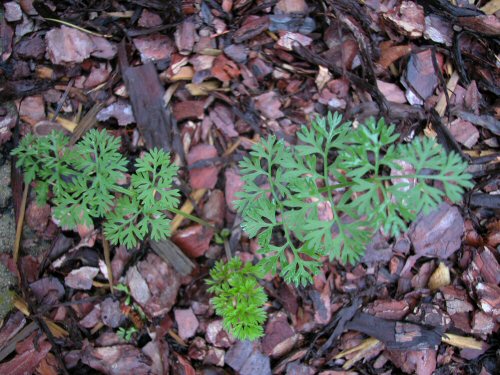
Vegetative Feature
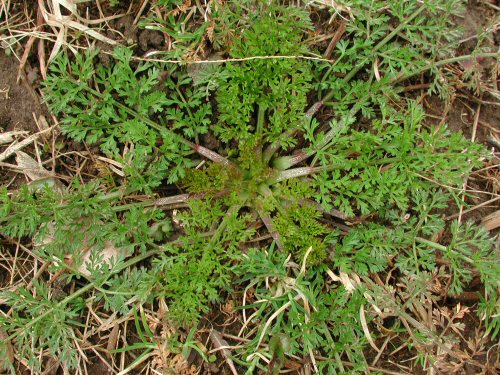
The stem of the Daucus
carota comes from a large taproot. The bottom is very dense and then
spreads out as you go upwards. All the branches off of the stem start at one
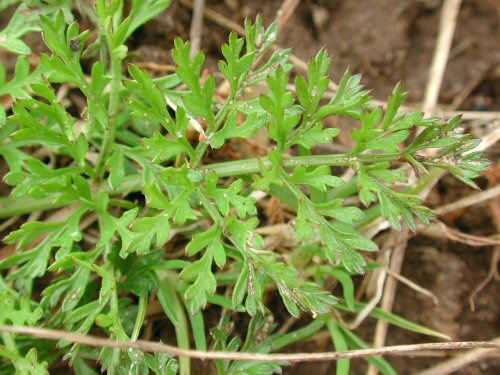
point. This root is what is eaten, what we know as the carrot. The leaves
alternate, and have very small spines. When the D. carota are
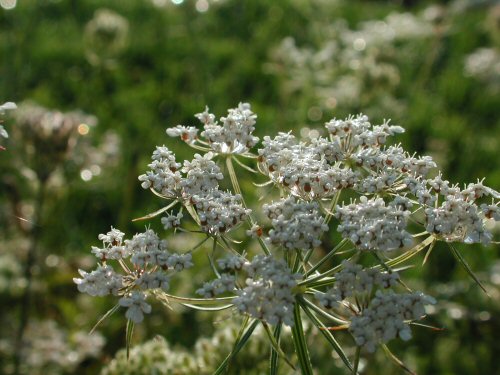
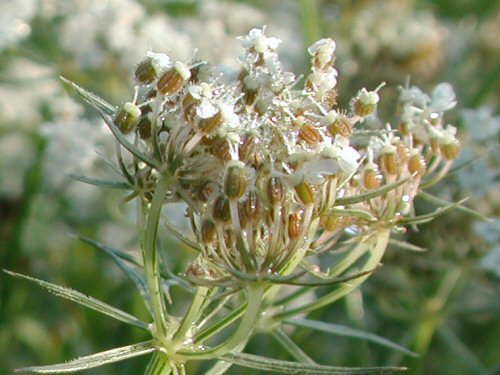
ready to reproduce, they have lots of white petals. This flower is called a corolla.
The leaves are in a compound umbel.
They flower from May-October. A unique vegetative feature is their long
taproot. This taproot is where most materials are stored. This part is eaten as
an orange carrot. The selective
pressures that influence the D. carota is the callous environment
that it lives in. The taproot allows
the D. carota to survive in harsh conditions. This taproot holds nutrients that make it
perfect to thrive in conditions such as the roadside, in this case
“pathside.” Some data that supports
this is that the D. carota can live in temperatures at 16 degrees
C (see part 1A for data). Although the
selective pressures influence the D. carota, it has adapted
through its taproot to survive in harsh conditions.
Reproductive Feature
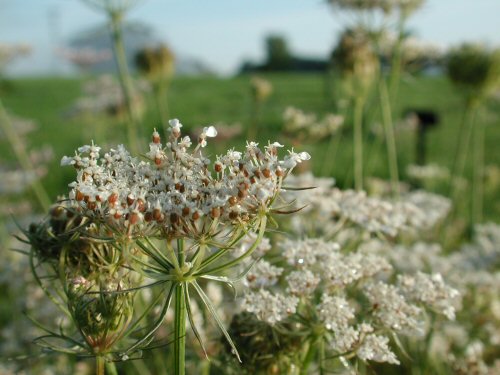
The flowering of the D.
carota begins in July. The flowers are a white to a pale purple color.
The D. carota is biennial, so the organism will grow the first
year and then flower during the late spring and summer of the second. This is
influenced by the nutrients in the soil, an abiotic factor. The organism can
live in very harsh conditions, so it needs two years to gather necessary
nutrients before it matures. The flowers come in many clusters called umbels,
which are composed of many flowers that have five petals each. Male parts,
anthers, will develop earlier than the females to allow for cross-pollination.
Many different insects can spread the pollen from flower to flower. When
cross-pollination does not occur, self-pollination will occur. By this time,
the female pistils are fully developed.
Seeds are released from mid-summer all of the way into winter. Seeds are spread through wind and animal fur or even through the digestive system of a horse. It seems that selective pressures have made seed spreading possible in a number of different ways. Should there be no wind or no free living organisms to spread seeds, the D. carota can still survive easily. An entire reliance on wind, something that certainly isn’t consistent, could be devastating to populations of the D. carota. Once all of this has occurred, the D. carota will die off, unable to survive the frost of winter.